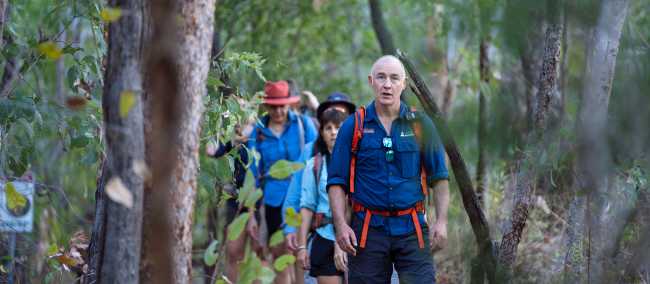
Walking in Kakadu National Park | Shaana McNaught
Blog home / Why Walking Kakadu Is the Top End Experience Most Travellers Miss
Most people who visit Kakadu see it through a windscreen.
And while that's not nothing - Kakadu rewards even a fleeting visit - it barely scratches the surface of what the park actually offers to those who slow down, lace up and walk into it.
Australia's largest national park is UNESCO World Heritage listed for both its natural and cultural values. It's home to ancient rock art, extraordinary wildlife, spectacular waterfalls and a living indigenous culture that stretches back more than 65,000 years.
But the parts of Kakadu that genuinely stop you in your tracks are almost all only reachable on foot, and best understood with an expert guide beside you.
Here's what walking Kakadu actually looks like.
You Get to the Places Others Don't
Kakadu's road network covers a fraction of its 195,000 square kilometres. The waterfalls, gorges, rock art sites and swimming holes that define the park's character sit well beyond the car park. Getting to them means walking - sometimes short approaches, sometimes longer half-day hikes into escarpment country that feels genuinely remote.
Jim Jim Falls, Twin Falls, Mardugal and the recently reopened Gunlom - with its famous natural infinity pool at the top of the escarpment - are all experiences that reward the effort of getting there on foot. The drive-through version of Kakadu and the walking version are simply not the same place.
The Rock Art Makes Sense When Someone Explains It
Kakadu contains one of the world's greatest collections of ancient rock art — images more than 20,000 years old at sites like Nourlangie, painted and maintained by the Bininj and Mungguy people across thousands of generations.
Standing in front of these sites without context, it's easy to look and move on. With an experienced guide — someone who understands the Dreaming stories, the cultural law and the living significance of what you're looking at, the same site becomes one of the most profound experiences in Australian travel. The difference is not subtle.
The Cultural Immersion Goes Deeper Than Any Visitor Centre
On a guided walk with Australian Walking Holidays, day one includes a private experience at Pudakul — a talk and walk led by a traditional owner from the Bininj and Mungguy community. You hear Dreaming stories, learn about the deep relationship between people and country, and begin to understand how the park is co-managed by its traditional custodians alongside Parks Australia.
It sets a tone for the rest of the trip that no visitor centre exhibit can replicate. By the time you reach the rock art sites and the waterholes later in the week, you're seeing them through a completely different lens.
The Wildlife Rewards Patience
Kakadu is home to more than a third of Australia's bird species. The yellow water billabong cruise at sunset - one of the highlights of any guided itinerary - delivers jabirus, white-bellied sea eagles, azure kingfishers, rainbow bee-eaters and saltwater crocodiles in the kind of proximity that reminds you why people travel to the other side of the world for wildlife experiences that exist right here at home.
Walkers moving quietly through the landscape at dawn encounter things that coach tours simply don't. The guides who lead these trips spend months in the park each season. Tthey know where to look, what to listen for, and how to read the country around you.
The Camps Put You Inside the Park, Not Outside It
Australian Walking Holidays operates exclusive semi-permanent campsites within Kakadu - away from the public campgrounds, set up and ready when you arrive each afternoon. Safari-style tents with stretcher beds, thick mattresses and camp chairs. Three-course dinners cooked by your guides. A campfire as the light fades and the stars come out over the escarpment.
Staying inside the park rather than retreating to Darwin or Jabiru each evening changes the experience completely. The early mornings belong to you. The wildlife that moves at dusk and dawn is on your doorstep. The silence is beyond serene.
Kakadu Is For Everyone
Walking Kakadu doesn't require elite fitness or extensive hiking experience. The Explorer itinerary is graded introductory to moderate, runs as a day pack trip, and is genuinely accessible to walkers of most fitness levels - including families, with child pricing available for children aged 8–15 on school holiday departures.
For those looking for a bigger physical challenge, the Challenger itinerary adds longer escarpment walks including the climb to the top of Jim Jim and Twin Falls - a step up in effort that delivers a step up in perspective.
Either way, you leave with something that the drive-through version of Kakadu simply doesn't offer: the feeling of having actually been there.
When to Go
The dry season - June to September - is the window. Warm days, cool nights, accessible trails and waterholes at their clearest. For most Australians it's the middle of winter, which makes heading north to walk in sunshine a very easy decision.
Australian Walking Holidays has been guiding walks in Kakadu since the mid-1990s. We hold Advanced Ecotourism Certification and work in close partnership with the traditional owners and Parks Australia.
View our Kakadu itineraries and find the right walk for you.