Discover the Overland Track's World Heritage wilderness | Matt Horspool
Blog home / The Overland Track: Flora and fauna on the trail
The Overland Track is Australia’s premier extended bushwalk. The Cradle Mountain Lake St Clair National Park is renowned for its beauty, featuring abundant wildlife, rare and unusual vegetation and dramatic scenery.
Trekking the Overland Track is the ideal experience for anyone interested in wildlife watching, ecology or earth science. The landscape is extremely old, and its dramatic shapes were carved about 10,000 years ago in the last ice age when a 6km ice cap carved the landscape into the distinct valleys and mountains we see today.
Thanks to its unique landscape offering a variety of localized climates, there is a surprising amount of life that thrives in the National Park.
Wildlife
The Cradle Mountain Lake St Clair National Park is home to an abundant amount of wildlife, and while many creatures are considered shy, it’s not uncommon to stumble across them while making your way along the trail. Wombats and pademelons are the most common animals to spot, often crossing paths with trekkers along the trail.
Keep your eyes down on the trail and on the duckboards, as wombats will often leave little ‘surprises’ for trekkers to step on later in the day. While at your campsite in the evening, ensure your food and meals are well secured in your tents; it’s not uncommon for mischievous possums to find their way into your packs to nibble on your snacks if left unattended. And, if you have an eager eye you may even spot shy echidnas, quolls, Bennett’s wallabies and Tasmanian Devils that blend easily into the landscape.
Cast your eyes to the sky and you’ll easily spot green rosellas, ravens, black currawongs, pink robins and Tasmanian scrubwrens, or even peregrine falcons and wedge-tailed eagles soaring around the mountain cliffs.
Fungi
Given the park’s diversity of plants, specialist habitats and micro climates, there’s also a great diversity of fungi, including lichens, that thrive during the autumn months and add stunning small bursts of colour to the landscape.
Aside from the colour that fungi adds to the land, there are a number of positive ecological roles that fungi performs by regulating the ecosystem. Certain types of fungi in the National Park are able to break down fallen branches and leaf litter, returning the nutrients to the land and making them accessible for other organisms, effectively recycling organic matter.
There are hundreds of species of fungi in the park, and though often overlooked, fungi is an incredibly unique creation. One of the most obvious species found in the wetter areas of the park is the strawberry bracket fungus, which grows on myrtle beech and snow gums.
Plants and trees
The Overland Track takes trekkers along an ever-changing landscape of alpine moorelands, buttongrass plains, mountain rugged peaks and temperate rainforests. With such a wide variety of alpine and sub-alpine vegetation, there are hundreds of species of plants, trees and flora that live in the area.
The Cradle Mountain-Lake St Clair National Park is a significant location of Tasmania's endemic species — 40–55% of the park's documented alpine flora is endemic. Some of the well known vegetation are the colourful deciduous beech, Australia's only cold climate winter-deciduous tree found only in Tasmania.
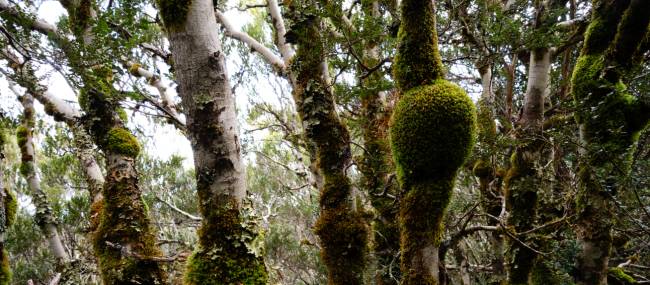
In autumn, its leaves transform from rusty red to brilliant gold, and is best seen in the remote highlands of the Overland Track. Within the valleys, trekkers pass species of trees such as myrtle beech, pandani, sassafras, King Billy pine and celery top pine. Together, these form a thick temperate rainforest with dense, mossy undergrowth – a magical environment to walk through.
Slightly higher elevations can find Tasmanian snow gum, alongside Tasmanian eyebright, scoparia heath, mountain rocket, waratah, Cheshunt pine and pencil pine. Head uphill and you’ll pass Alpine coral fern and button grass that dominate the alpine wet sedgelands near the mountain summit.